Ask almost anyone over 70 in Fort Myers, Cape Coral, or Sarasota where they’d like to grow old and you’ll hear the same answer: right here, in my own house. Aging in place is realistic for most families. It just doesn’t happen on its own. It takes grab bars and brighter bulbs, a hurricane plan, and usually a few hours of help each week. Here’s what it actually takes, from people who spend every workday inside Southwest Florida homes.
The Short Version
- ✓Fix the bathroom first: anchored grab bars, a shower chair, non-slip mats, a raised toilet seat, a night light.
- ✓Brighten the whole house, tape down or remove throw rugs, and keep walking paths clear.
- ✓Florida adds lanai thresholds, slick lanai tile, summer heat, and a hurricane plan.
- ✓A few hours of weekly help covers showers, meals, rides, and medication reminders.
- ✓Home care in Southwest Florida runs about 28 to 38 dollars an hour.
We’ve been in a lot of houses across Lee, Collier, and Sarasota counties, and the same hazards show up in nearly all of them. A bath mat that slides. A dark hallway. A lanai threshold that catches a toe. Little of it is expensive to fix. This is the aging in place checklist we’d give our own parents, in the order we’d tackle it.
From Our Office
Our cards on the table first. A Perfect Choice Home Care is a family-owned, Florida-licensed home health agency serving Southwest Florida since 2021, and what we provide is one-on-one in-home care. We don’t sell grab bars, remodel bathrooms, or install alert systems, so nothing on this list puts a dime in our pocket. It’s just what we’d tell you at your own kitchen table.
Bathroom safety for seniors comes first, because that’s where falls do the most damage
About one in four Americans age 65 and older reports a fall each year, according to the CDC, and the bathroom is where a fall is most likely to do real damage. The floor is hard tile, it gets wet, and two of the day’s most awkward movements happen in there: stepping over a tub wall and getting up from a low toilet. When we start with a new client anywhere from Naples to Bradenton, the bathroom is the first room we check.
The whole fix is a short list, and none of it requires a contractor:
Checklist: The Bathroom
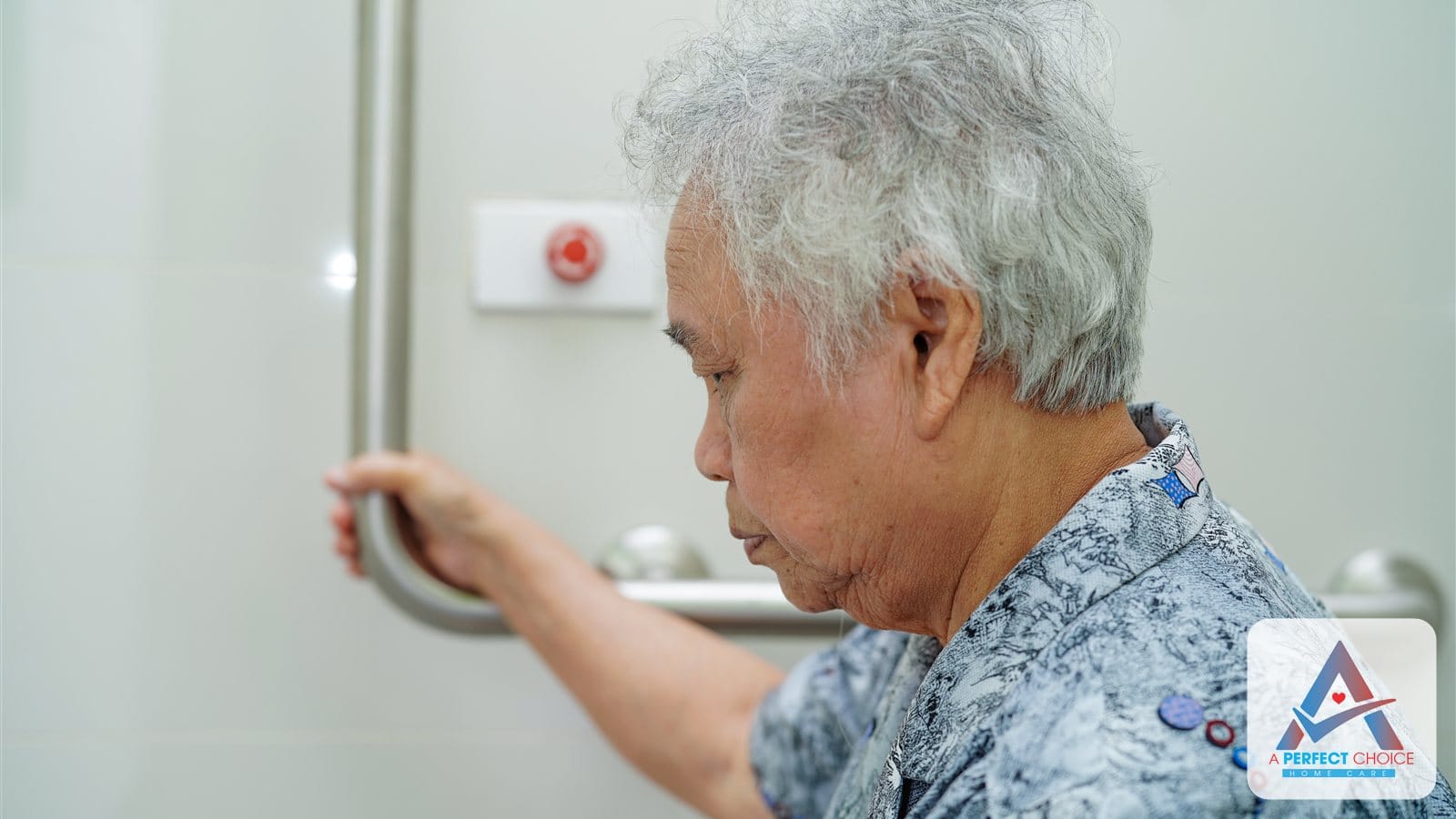
- ✓Grab bars anchored into wall studs, one at the shower entrance and one beside the toilet. Towel bars and suction-cup bars don’t count; they let go the moment someone leans on them.
- ✓A shower chair or transfer bench, plus a handheld shower head, so nobody has to stand and pivot on wet tile.
- ✓Non-slip strips inside the shower and a rubber-backed mat that actually grips outside it.
- ✓A raised toilet seat or a comfort-height toilet. Getting up from a standard toilet is a bigger fall risk than most people realize.
- ✓A night light. Most of the bathroom falls we hear about happened between midnight and dawn.
Hardware stores from Cape Coral to Venice stock all of it. One Saturday of work, and you’ve taken the sharpest edges off the room that worries us most.
Elderly fall prevention beyond the bathroom: lighting, rugs, clutter, stairs
Once the bathroom is handled, walk the rest of the house the way a tired 80-year-old would at 2 a.m. That’s the honest test. Fall proofing a home for an elderly parent is mostly subtraction, not construction. Throw rugs are the classic offender. They either leave the house or get taped down with rubber backing, and we’ve watched a beloved forty-year-old rug win that argument against three worried adult children. If it stays, tape it down.
Then lighting. Aging eyes need far more light, so put the brightest bulbs the fixtures allow in the kitchen and hallways, add night lights along the bed-to-bathroom route, and make sure a lamp is reachable from the bed. Clear the walking paths of cords and clutter, wide enough for a walker even if nobody uses one yet. Southwest Florida’s single-story houses spare us most staircases, but watch the sneaky steps: down into the garage, the sunken living room, the front entry. A solid handrail and a strip of contrasting paint on the edge go a long way.
The bigger home modifications for seniors can wait until there’s a specific reason: a walk-in shower conversion, lever door handles, a ramp at the front door. Those usually go in after a hospital stay, not before.
The Florida layer: lanai thresholds, heat, and hurricane season
The national checklists never mention the lanai, and down here it matters. Nearly every house from Punta Gorda to Naples has a raised slider track between the living room and the lanai, and that little aluminum ridge catches more toes than any staircase. A low-profile threshold ramp on each side fixes it. And lanai tile turns slick as glass after a summer rain, so the non-slip conversation applies out there too.
Worth Knowing First
Heat is the quieter danger. Thirst fades with age, and plenty of seniors take medications that pull fluid from the body, a rough combination in a Florida summer. Keep a filled water bottle next to the recliner, not in the kitchen, unless a doctor has set a daily fluid limit, which is common with heart and kidney trouble. And treat a broken air conditioner in August as the emergency it is, especially for anyone living alone. If someone turns confused, stops sweating, or their skin goes hot and dry, that is heat stroke, and it is a 911 call, not a glass of water.
Every stay-at-home plan down here also needs a hurricane page: a current medication list, at least a week of refills, water and shelf food, and an evacuation answer decided in calm weather. Deciding at midnight with a storm in the Gulf is how bad choices get made. Update it every June, and make sure someone outside the household knows where it is. If your parent cannot get out on their own, or depends on oxygen or another powered device, register them with the county Special Needs Registry through county emergency management. It costs nothing, and it has to be done long before a storm has a name. Our hurricane prep guide for Southwest Florida seniors is the longer version of that page.
Checklist: Florida Specifics
- ✓A low-profile threshold ramp on each side of the lanai slider track.
- ✓Non-slip treatment for lanai tile, which turns slick after summer rain.
- ✓A filled water bottle next to the recliner, unless a doctor has set a fluid limit.
- ✓Treat a broken air conditioner in August as an emergency.
- ✓A hurricane page: medication list, a week of refills, water, shelf food, and an evacuation answer.
Not sure which of these your parent’s house actually needs? Call us and we’ll talk through what we’d look at first.
Medical alert systems and other technology, kept practical
You can spend a fortune on senior-safety gadgets, and most of them end up in a drawer. Four things earn their keep:
- ✓A medical alert device with automatic fall detection, but only if it actually gets worn. The button still matters too, because automatic detection misses some falls. A watch style gets worn far more often than a pendant, especially by men who wouldn’t be caught dead in a necklace.
- ✓A video doorbell, so nobody hurries to the door. Hurrying is a fall risk, and door-to-door scammers who target seniors are a separate problem it helps with.
- ✓Motion night lights or smart bulbs along the bed-to-bathroom route, plus a lamp on a timer so the house is never fully dark.
- ✓A lockbox with a house key, mounted by the door, so EMS or family can get in without breaking a window. Cheap, boring, and it means nobody is stuck on the porch while the clock runs. Give the code to whoever might need it, including the alert company.
Skip anything that depends on an app your parent will never open. Those get set up once by a grandchild at Christmas and never touched again.
What a few hours of help a week actually covers
Grab bars don’t notice things. People do. The families who make aging in place work for years, not months, usually have a human layer, whether that’s a daughter around the corner or a caregiver who comes a few mornings a week. When it all lands on one person, respite care is how that person gets a day off.
Here’s what a few hours actually buys. Standby help in the shower, which puts a person right there at the moment risk peaks. A cooked meal, and another in the fridge for tomorrow. Laundry done. A ride to Publix and the cardiologist. Medication reminders. And a second set of eyes that notices the bath mat has quit gripping or the slippers are worn smooth, because our caregivers treat fall prevention as part of the job, not an extra. That’s the everyday heart of our personal care services and companionship care.
As for what it costs, home care in Southwest Florida typically runs about 28 to 38 dollars an hour, and our guide to home care costs in Florida breaks down what moves that number. Set that against what one bad fall can set in motion, and a few hours a week starts to look sensible. Paying for it is its own puzzle, and we lay out the routes families actually use in how to pay for home care in Florida.
When aging in place stops being safe alone
Families put this part off, and we understand why. Some seniors reach a point where the house is safe but being alone in it is not. The signals are usually obvious in hindsight: a fall with nobody there to help up, food spoiling in the fridge, pills doubled or skipped, wandering at night, unopened mail piling up. Two of those are medical before they are anything else. A fall nobody saw deserves a same-day call to the doctor, and a doubled dose means calling the pharmacist or the prescriber that day rather than waiting to see what happens. If a few of those sound familiar, our list of 10 signs your aging parent may need in-home care is a useful gut check. And if a parent has already wandered off once, read what to do if a parent with dementia goes missing now rather than later.
What changes first is usually the schedule, not the address. Hours go up. An overnight caregiver gets added for the 2 a.m. bathroom trip. Some families move to 24-hour home care so someone is always awake in the house. And sometimes home stops being the right answer, and when we see that, we say so. Our comparison of home care vs. assisted living walks through that decision without letting guilt drive. And if you’re only at the wondering stage, what to expect at a first home care visit shows how the first conversation actually goes.
Aging in place: frequently asked questions
What does aging in place mean?
Aging in place means staying in your own home safely and comfortably as you get older, instead of moving to assisted living or a nursing home. In practice it takes some home modifications, a plan for risks like falls, heat, and storms, and a growing amount of help over time, from family, an agency, or both.
What home modifications do seniors need to age in place?
The bathroom comes first: grab bars anchored into studs, a shower chair, a raised toilet seat. After that it is lighting and floors. Brighter bulbs, throw rugs gone or taped down, cords off the walking paths, a handrail at the garage step and the front entry. A walk-in shower or a ramp usually comes later, once a specific need shows up.
How do you fall proof a home for an elderly parent?
Walk the house hunting for anything that slides, snags, or hides in the dark. Secure or remove throw rugs, add night lights along the route from bed to bathroom, keep pathways clear of cords and clutter, and install grab bars where the wet tile is. In Southwest Florida, add the raised lanai threshold and slick lanai tile to the list.
What makes a bathroom safe for seniors?
Anchored grab bars at the shower and toilet, a shower chair with a handheld shower head, non-slip mats, a raised toilet seat, and a night light. The bathroom pairs wet tile with the day’s most awkward movements, which is why it produces so many falls. And towel bars are not grab bars; they pull out of the wall under real weight.
How much does it cost to age in place in Florida?
Grab bars, mats, and better bulbs are cheap, and you buy them once. The ongoing cost is usually the help itself: home care in Southwest Florida typically runs about 28 to 38 dollars an hour as of this writing, and many families start with a few hours a week. Some families get help from VA Aid and Attendance, Florida’s Statewide Medicaid Managed Care Long-Term Care program, or long-term care insurance, though each has its own eligibility rules and the Medicaid program runs through a screening and can carry a wait list. Check va.gov or the Florida Department of Elder Affairs for current rules, and ask any agency you call which programs it actually bills.
When is it no longer safe to age in place alone?
Watch for falls that happen when no one is there, missed or doubled medications, weight loss, wandering at night, and hygiene slipping. Some of those are medical questions before they are staffing questions. An unwitnessed fall, a doubled dose, or confusion that came on suddenly all warrant a call to the doctor that day, and 911 if there was a head injury or a fall someone cannot get up from. Once a doctor has weighed in, the answer is usually more supervision rather than a move. Many families add overnight or 24-hour caregivers first, and only look at assisted living if round-the-clock needs outgrow what home can handle.
What are the problems with aging in place?
The honest ones: isolation, a fall with nobody there to help, and small problems staying hidden until they turn into big ones. A house that worked fine at 70 can turn on a person at 85, with a tub wall to climb and a lanai threshold to catch a toe. Cost creeps up too, because help usually starts at a few hours a week and grows from there. And the person aging in place is often the last one to admit it is getting hard. Most of that is manageable if a family names it early instead of waiting for a fall to force the conversation.
What is the 40/70 rule for aging?
It is a conversation rule of thumb: by the time an adult child turns 40, or a parent turns 70, the family should start talking about aging, health, money, driving, and what happens if the house stops working. The point is not to hold a grim family meeting over Thanksgiving dinner. It is to have the first conversation while everyone is calm and nothing has gone wrong yet. Families who start early tend to make better decisions than families who start in a hospital hallway at 2 a.m.
What is another term for aging in place?
You will hear independent living at home, staying at home, and sometimes living in place. Health and policy writers say community-dwelling older adult, which nobody has ever said out loud at a kitchen table. Builders and occupational therapists talk about universal design or an age-friendly home, meaning a house built so it still works when mobility changes. Different labels, same goal.
Want a second set of eyes on Mom or Dad’s house?
If you’re trying to figure out whether a few hours of help a week would keep your parent safe at home in Fort Myers, Naples, Sarasota, or anywhere in between, call A Perfect Choice Home Care and talk it through. No pressure, and the conversation costs nothing.
Fort Myers (239) 400-4514 · Lakewood Ranch (941) 799-7559 · or send us a message and we’ll reach out.
Not sure what kind of help your family needs yet? That's normal.
Tell us a little about what's going on at home. One of our care team calls you back the same business day, listens, and gives you an honest read on whether home care would help and how many hours make sense. No pressure, and nothing to sign.
- Florida-licensed home health agency since 2021
- Free in-home care assessment
- Lee, Collier, Charlotte, Sarasota, Manatee and Hillsborough counties
Request a call back