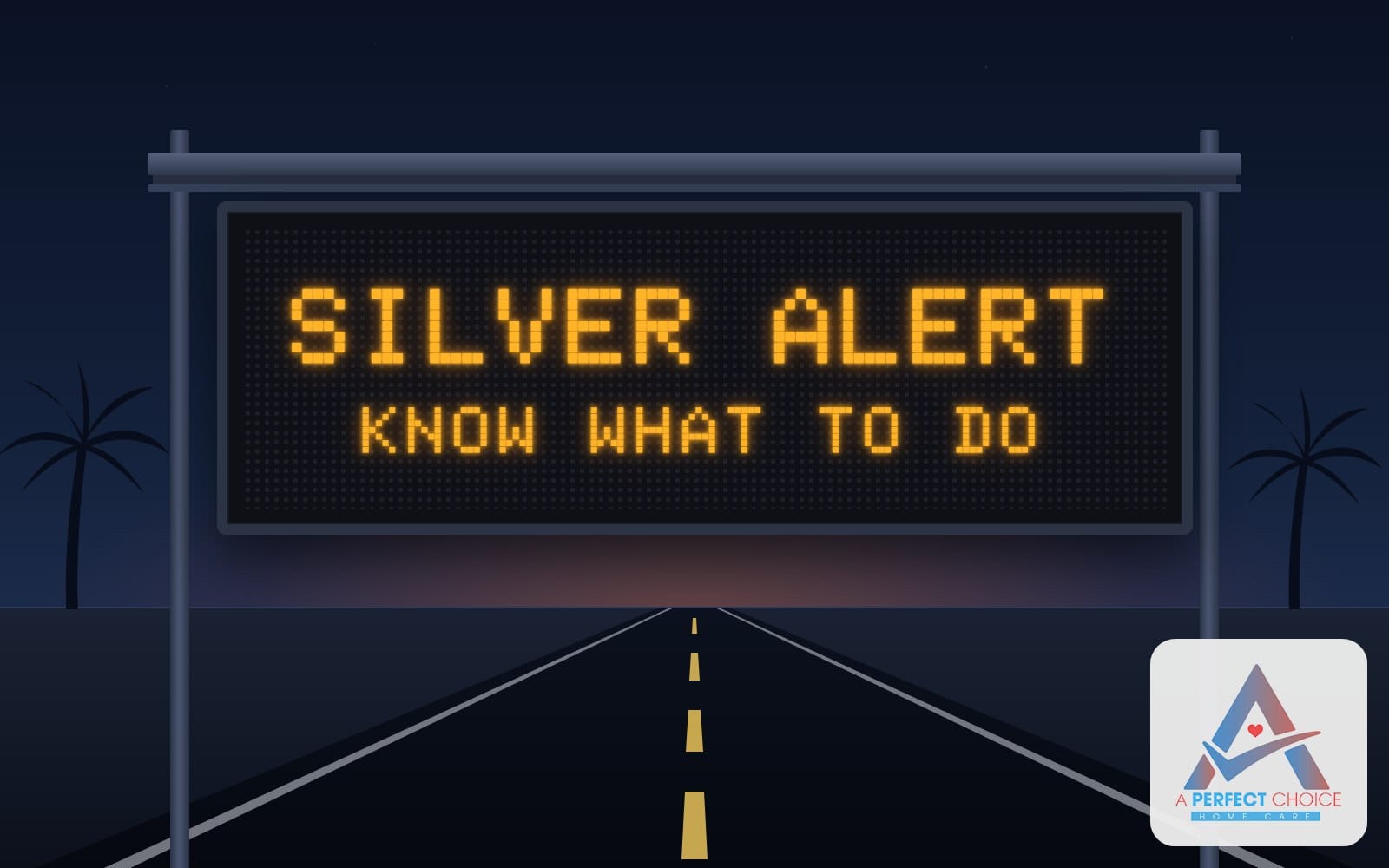
September is World Alzheimer’s Month, and there’s one part of dementia that rarely makes the awareness posters: the afternoon Dad walks out to get the mail and doesn’t come back. If you drive in Florida, you’ve probably seen a Silver Alert on one of those big highway signs. Here’s what that alert really is, who qualifies, what to do in the first 15 minutes if it’s your parent, and how to make it a lot less likely you’ll ever need one.
The Short Version
- ✓A Silver Alert is Florida’s system for finding a missing person with Alzheimer’s or another dementia. Police start it. Families don’t.
- ✓If your parent goes missing, search close by, and call 911 if 15 minutes pass. Florida has no waiting period.
- ✓A statewide alert needs a vehicle police can describe. Someone who’s missing on foot can still get a local alert.
- ✓A Purple Alert covers adults with other cognitive or developmental disabilities. Dementia is always Silver.
- ✓Most wandering can be headed off with routine, hidden car keys, a tracking program, and another person in the house during the risky hours.
On This Page
What a Florida Silver Alert actually is
The Florida Department of Law Enforcement, or FDLE, coordinates the program. Its Silver Alert page says who it’s for: missing people with an irreversible decline in mental ability, verified by police. In real life, that mostly means Alzheimer’s disease and other dementias.
Local police or the sheriff’s office decide whether to issue one. Here’s how it usually moves:
The statewide version is the one you’ve seen overhead. FDLE puts it on the message signs along Florida highways, the ones the Florida Department of Transportation runs, and sends it by email and text to people who’ve signed up through FDLE.
Just saw an alert and want to check on it? FDLE keeps the current list of Florida Silver Alerts on its missing persons page. And if you spot the person or the car, call 911 and let the officers handle it.
Who qualifies for a Silver Alert in Florida
FDLE spells out the criteria. Every Silver Alert starts with two basics:
- ✓Age 60 or older. Adults 18 to 59 can qualify too, if police decide the person lacks the capacity to consent and that the highway signs may be the only way to find them.
- ✓An irreversible decline in mental ability, such as Alzheimer’s disease or another dementia, that police have verified.
After that, it depends on which kind of alert:
Two things follow from that. You don’t request the alert yourself. You call 911, and the officers decide. And the facts that matter most on that call are the diagnosis and whether a car is gone, since only a vehicle takes an alert statewide. Mention a missing golf cart too. In a lot of our communities, that’s how Dad gets around.
Silver Alert vs. Purple Alert
Florida added the Purple Alert in 2021, under section 937.0205 of the state statutes, for adults who go missing with a disability that isn’t dementia. Here’s how the two line up:
So if your parent has dementia, it’s a Silver Alert. If it’s your adult son with autism or a brain injury, police would look at a Purple Alert instead. And the AMBER Alerts you already know are for children.
If your parent goes missing: the first 15 minutes
Panic eats time, so it helps to know the order before you ever need it. Start with three numbers:
Search close, and start now
Don’t wait to see if they wander back. The Alzheimer’s Association says many people who wander are found within a mile and a half of where they went missing, and that the path tends to follow their dominant hand. Check the car, the mailbox, the neighbors’ yards, and anywhere they’ve talked about going, like an old address, a church or a favorite store. The Association also says to check ponds, tree lines and fence lines. Around here, that means the pool, the lanai, and the retention pond or canal down the street.
Call 911
That’s the Alzheimer’s Association’s rule of thumb, and it’s a good one. You don’t have to wait 24 hours. Florida law says police must accept a report that an adult is missing, and once they have a credible report, they have two hours to get it into state and national crime databases.
Give dispatch the details that matter
The diagnosis. What they’re wearing. A recent photo, which you can text. Whether a car or golf cart is gone, with the plate number. Any medicine they can’t miss, like insulin. Whether they have a phone or watch that shares location. Which hand they favor. The places they’ve mentioned lately, even ones that don’t exist anymore.
Call the state clearinghouse
FDLE asks families to call local police first, then its missing persons clearinghouse at 1-888-356-4774. That’s 1-888-FL-MISSING.
Keep someone at home
People often come back on their own, or a neighbor walks them back. Have one person stay by the door and the phone. In a gated community, call the gatehouse too. The guards may have already seen them.
What to have ready before you ever need it
Ten minutes of prep on a calm afternoon beats trying to remember eye color at two in the morning. Start with a one-page sheet.
Heading off wandering at home
It usually starts small. Watch for these:
- Coming back from a normal walk or drive later than usual
- Getting turned around on the way to places they know well
- Talking about going home when they’re already home
- Pacing or restlessness, especially later in the day
- Trouble finding the bathroom or the bedroom
- Asking where old friends or family members are
What helps is mostly unglamorous:
And skip crowded, confusing places, like a big store on a Saturday. If you can’t tell which stage your parent is in, our guide to the stages of dementia walks through what tends to change and when.
Where home care fits
We’re a home care agency, so take this with that in mind.
- ✓Covers the hours when wandering actually happens
- ✓Keeps the day on track, with fewer empty stretches
- ✓Notices the small changes, like longer walks or more talk about going home
- ✓Stays overnight, or around the clock, when nights get hard
- ✕Door chimes and good locks
- ✕A tracking bracelet
- ✕Calling 911 fast if they do get out
Early on, that’s often a few afternoons a week. When nights get hard, it’s overnight or 24-hour care. With our dementia care, we try to keep the same small group of caregivers coming back, because a familiar face settles things in a way a stranger can’t. Home care in Southwest Florida generally runs about $28 to $38 an hour, and our cost guide breaks down what shapes that number.
If your parent has already wandered once, tell us on the first call. It changes how we’d set up the schedule.
Silver Alert in Florida: common questions
What is a Silver Alert in Florida?
It’s Florida’s system for finding a missing person with Alzheimer’s disease or another dementia. Local police or the sheriff’s office decide whether to issue one. A statewide alert shows up on highway message signs and goes out by email and text to people who’ve signed up. It needs a vehicle with a plate number or other details police can share. Someone who’s missing on foot can still get a local alert.
Who qualifies for a Silver Alert in Florida?
The person has to be 60 or older, or 18 to 59 if police decide they lack the capacity to consent and that highway signs may be the only way to find them. They also need an irreversible decline in mental ability, like Alzheimer’s or another dementia, that police have verified. A local alert requires police to conclude the disappearance is a credible threat to the person’s safety. A statewide alert also requires that they’re traveling in a vehicle police can describe.
What’s the difference between a Silver Alert and a Purple Alert?
A Silver Alert is for missing people with Alzheimer’s or another dementia. Florida created the Purple Alert in 2021 for missing adults with other conditions, like an intellectual or developmental disability, a brain injury, or a cognitive disability that isn’t dementia. It only applies when the person doesn’t meet the Silver Alert criteria and police believe they’re in real danger.
Do you have to wait 24 hours to report a missing adult in Florida?
No. Florida law says police must accept a report that an adult is missing, and once they have a credible report, they have two hours to get it into state and national crime databases. With dementia, the Alzheimer’s Association says to call 911 if you haven’t found the person within 15 minutes.
Is there a Silver Alert in Florida right now?
The Florida Department of Law Enforcement lists active Silver Alerts on its missing persons clearinghouse page. You can also sign up on FDLE’s Silver Alert page to get new alerts by email or text.
How do I stop a parent with dementia from wandering?
Keep the day structured, learn which hours are the risky ones, and make sure basic needs like the bathroom, food and water are covered. Put the car keys away, add door chimes, and look into a wandering response service, or Project Lifesaver if it’s offered in your county. Having another person in the house during the late afternoon and evening helps a lot.
Can in-home care help with dementia wandering?
It can help, but it isn’t a lock. A caregiver covers the hours when wandering usually happens, keeps the day structured, and notices the early warning signs. For wandering at night, overnight or 24-hour care is usually the answer. It works best alongside door chimes, hidden car keys and a tracking program.
Where We Come In
A free in-home assessment shows you which hours are the risky ones and what it would take to cover them. We’re in Fort Myers, Naples, Sarasota, Lakewood Ranch and plenty of the smaller towns nearby.
Call and tell us what happened. We’ll help you work out the next step.
Call Fort Myers (239) 400-4514
Rather write than call? Send us a message and we’ll get back to you. A Perfect Choice Home Care, Florida-licensed home health agency since 2021. HHA 299995428 (Fort Myers) and HHA 299995533 (Lakewood Ranch).
Facts checked in September 2026 against FDLE’s Silver Alert criteria, Florida Statutes sections 937.021 and 937.0205, and the Alzheimer’s Association. This guide is general information, not legal advice. If someone is missing right now, call 911.
Not sure what kind of help your family needs yet? That's normal.
Tell us a little about what's going on at home. One of our care team calls you back the same business day, listens, and gives you an honest read on whether home care would help and how many hours make sense. No pressure, and nothing to sign.
- Florida-licensed home health agency since 2021
- Free in-home care assessment
- Lee, Collier, Charlotte, Sarasota, Manatee and Hillsborough counties
Request a call back