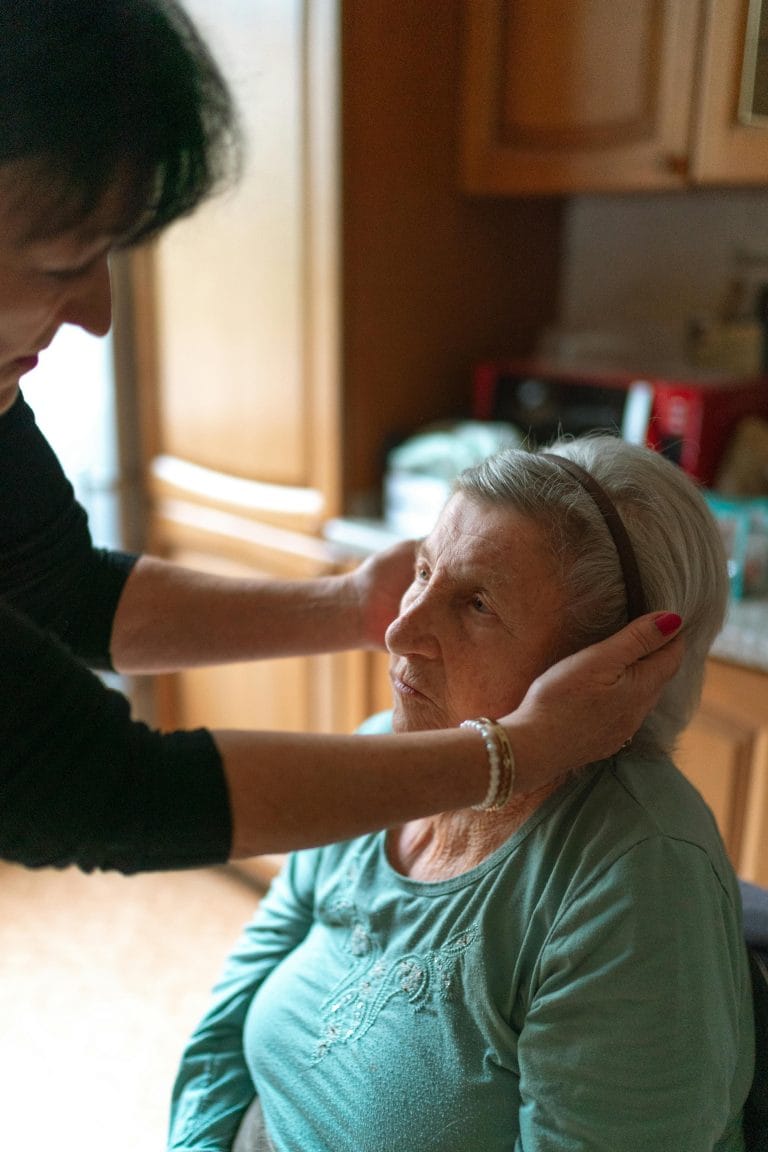
Every home care website in Florida says the same four things: compassionate, licensed, bonded, insured. None of that tells you who’s going to be standing in your mother’s bathroom on Thursday morning, or what happens when that person calls in sick. This is the guide we would want a friend to read before choosing anyone, including us. It starts with the license, because the license is the one part of the pitch you can check.
The Short Version
- ✓Ask for the state license number on the first call and look it up yourself on FloridaHealthFinder. Anyone who hesitates has answered your question.
- ✓Know the difference between a home health agency, a nurse registry, and a companion service. They are different licenses, and the license decides what a caregiver may legally do in the house.
- ✓Every caregiver must clear a Level 2 background screening under Florida law. Ask how the agency confirms it, not whether.
- ✓The three questions that expose a weak agency: who writes the care plan, what happens when a caregiver is out, and can I change the schedule without a penalty.
- ✓A rate far below the local range is a warning, not a bargain. So is a long-term contract.
On This Page
Start with the license, because it says what they are allowed to do
In Florida, anyone sending caregivers into a private home is licensed or registered by the Agency for Health Care Administration, and the type of license isn’t a technicality. It’s the legal boundary of what that caregiver can do once the door closes. The rules live in Chapter 400 of the Florida Statutes, and the three types you will run into are these.
Home health agency
Employs its caregivers, is responsible for them, and is inspected by the state. A home health agency license can cover skilled services like nursing and therapy, or it can be limited to non-skilled services, meaning hands-on personal care, bathing, dressing, meals, medication reminders and companionship. Both are real licenses. The question to ask is which one an agency holds, because a personal care agency cannot send a nurse and shouldn’t pretend it can.
Nurse registry
A registry refers independent caregivers to you. The caregiver is typically self-employed, which means you, not the registry, may be the employer for practical purposes. Some families like the flexibility and the price. Others discover on the first sick day that a referral service is not the same thing as an agency with a schedule to keep. Neither is wrong. You should know which one you’re buying.
Companion and homemaker service
Registered, not licensed, and limited by the statute’s own definition: a companion may not provide hands-on personal care. That means no help in the shower, no help on the toilet, no transfers. If your parent needs any of those and the company you are talking to is a companion service, the conversation is over before it starts, however nice they are.
Here’s the part that takes two minutes and almost nobody does. Ask for the license number, then look it up on FloridaHealthFinder, the state’s public database. You will see the license type, whether it is active, and the inspection history. An agency that gives you the number without being asked twice has nothing to hide. One that says “we’re fully licensed” and changes the subject has told you something.
Worth Knowing
Licenses are issued per office, not per company. An agency with two locations has two license numbers. If you are in Sarasota and the number they give you is for an office in Fort Myers, ask for the other one.
Home health versus home care, in one paragraph
These two phrases get used as if they were the same thing, and the confusion costs families money and time. Home health is skilled care: a nurse, a physical therapist, a wound that needs dressing. A doctor orders it, and it usually lasts a few weeks after a hospital stay. It comes from an agency whose license covers nursing and therapy. Home care is the daily hands-on help that makes living at home possible: bathing, dressing, meals, medication reminders, rides, company, overnight presence. It’s what most families are actually looking for when they search. We wrote out the full home health versus home care versus hospice comparison if you want the long version. The short version is that many families need both at once, from two different providers, and a good home care agency will tell you so.
Who is actually coming to the house
This is the question the brochures are designed to make you forget to ask. The agency is a phone number. The caregiver is the person your father will see more than he sees you. Three things to establish.
Screening. Florida requires a Level 2 background screening, fingerprints checked against state and federal records, for people working in this setting, under Chapter 435. Every legitimate agency does this because the law says so, so “are your caregivers background checked” isn’t a useful question. Ask instead how they verify it stays current, whether they check references and driving records on top of it, and whether they will tell you the name of the caregiver before the first visit. They should.
Employee or contractor. Ask directly. If the caregiver is the agency’s employee, the agency handles taxes, insurance, training, and the sick-day problem. If the caregiver is an independent contractor sent by a registry, some of that may land on you. Get the answer in writing, because it changes who is responsible if something goes wrong.
Matching and continuity. The single biggest predictor of whether home care works is whether the same person keeps coming. Ask how caregivers are matched, what happens if your mother does not like the first one, and what the agency does to keep the same faces on the schedule. “We have a large pool” isn’t an answer. “Here is how we build a small consistent team for each client” is.
Ten questions to ask on the first call
Print this. Ask all ten of every agency you call, in the same order, and write the answers down. The differences between agencies show up in the answers to three or four of these, and it’s never the ones you expect.
1. What is your license number and what type of license is it?
Then look it up. Two minutes. See above.
2. Who writes the care plan, and who updates it?
The right answer involves somebody from the agency coming to the house, sitting with your parent, and writing it down before the first shift. The wrong answer is “the caregiver will figure out what’s needed.”
3. What happens when the caregiver calls in sick?
This is the one that separates agencies from listings. You want to hear a specific process: who gets called, how fast a replacement arrives, and whether that replacement has met your parent before. A pause here means you’ll be the backup plan.
4. Can I change or stop the schedule without a penalty?
Needs change. Hospital stays happen. A parent gets better, or worse, or a sibling moves to town. The answer should be yes, with a reasonable notice period for individual shifts. A long-term contract or a cancellation fee is a sign the agency is protecting itself from you rather than serving you.
5. Are your caregivers your employees?
Yes or no, and if no, who is the employer of record and who carries the workers’ compensation and liability insurance if a caregiver is hurt in your home.
6. How are caregivers trained, and for what?
Safe transfers and fall prevention at minimum. If dementia is in the picture, ask specifically what dementia training looks like, because “our caregivers are experienced with dementia” means nothing and “here is the curriculum” means something.
7. Will I know who is coming, and can I meet them first?
A name before the first visit, and ideally an introduction. If the answer is that “someone from the team” will arrive, you are dealing with a staffing pool, not a care relationship.
8. How do you supervise, and how often does someone check in?
Somebody other than the caregiver should be looking at how it is going, on a schedule, and calling you when something changes. Ask who that person is and how you reach them at 7pm on a Sunday.
9. What is the hourly rate, what is the minimum shift, and what is not included?
Get the full number: the rate, any minimum hours per visit, weekend or holiday rates, mileage, and whether a deposit is required. Then compare that against the local range below.
10. What would make you tell me my parent needs more than you can provide?
A good agency has an answer, because it has happened. An agency that says “we can handle anything” either hasn’t been doing this long or isn’t going to tell you when it stops working.
Five red flags that should end the call
- ✓They will not give you a license number, or the number they give does not come up as active on FloridaHealthFinder.
- ✓Pressure to sign today. Limited-time rates, a “spot” that will go to someone else. Home care isn’t a timeshare. Anyone selling it like one isn’t thinking about your parent.
- ✓A rate well below the local range. Caregivers are paid from that rate. A number that is too good to be true means the caregiver is underpaid, uninsured, or not who they say they are, and any of the three ends badly.
- ✓Cash only, or an unwillingness to put the terms in writing. There should be a service agreement that says the rate, the notice period, and who is responsible for what. Read it before the first visit, not after the first invoice.
- ✓Promises that insurance or a program will cover it. Long-term care insurance, VA benefits, and Florida Medicaid can pay part or all of the bill, but only for people who qualify. An agency that tells you on the first call that it’s covered, before anyone has checked, is either confused about how this works or hoping you are. Our guide to paying for home care in Florida is the honest version.
What a good first visit looks like
Before any caregiver starts, somebody from the agency should come to the house. Not to sell, to look. They should walk the rooms your parent uses, notice the rug in the hallway and the step down to the lanai, ask about medications and the last fall and what a bad day looks like, and talk to your parent directly rather than over their head. Then they should tell you, in hours per week, what they think it would take. If that number is smaller than you feared, good. If it is larger, you want to know now.
That visit should be free, and it should not commit you to anything. We wrote about what to expect at a first home care visit in more detail, including the questions your parent is likely to be asked. An agency that skips this step and sends a caregiver straight from a phone call has skipped the part where they learn who your parent is.
What it should cost, and what is not a good sign
Across Southwest Florida you can expect to pay somewhere in the range of 28 to 38 dollars for each hour of care, and where you land in that range depends on how much help is needed, the schedule, and the town. Our cost guide turns that into real monthly numbers for common schedules. Overnight and 24-hour care are priced differently, and a good agency will explain how before you commit.
Two things to watch. A quote far below that range is a warning, for the reasons above. And a quote that arrives without the minimum shift length, the weekend rate, and the cancellation terms isn’t a quote, it’s an opening number. Ask for all of it in writing before the first visit. Most of the payment surprises families tell us about were in the fine print the whole time. If money is the constraint, our guide to how families actually pay for home care goes through the three sources that pick up some or all of the bill for people who qualify: long-term care insurance, VA benefits, and Florida Medicaid.
Our own answers, since we asked you to check
It would be strange to tell you to look up every agency’s license and then not hand you ours. A Perfect Choice Home Care holds two Florida home health agency licenses, one per office: HHA 299995428 in Fort Myers and HHA 299995533 in Lakewood Ranch. Both are the non-skilled services type. In plain terms, our caregivers handle the hands-on, day-to-day side of things: bathing and dressing, getting around the house safely, meals, reminders to take medication, company, and overnight or round-the-clock shifts when a family needs them. Skilled nursing and therapy aren’t something we offer or bill for, and if that’s what your parent needs, we’ll tell you so on the first call. We have been Florida-licensed since 2021. Look us up on FloridaHealthFinder the same way you would anyone else.
On the ten questions: the care plan is written by us, at your parent’s kitchen table, before the first shift, and it is a free visit. Sick days are covered by us, from a small team that has already met your parent where possible. There is no long-term contract, and the schedule can change with reasonable notice. Ask the rest when you call. We’d rather answer them than have you wonder.
Choosing a home care agency: frequently asked questions
How do I check if a home care agency is licensed in Florida?
Ask for the license number and search it on FloridaHealthFinder, the Agency for Health Care Administration’s public database. It shows the license type, whether it is active, and the inspection history. Licenses are issued per office, so an agency with two locations has two numbers.
What is the difference between a home health agency and a nurse registry?
A home health agency employs its caregivers and is responsible for scheduling, training, supervision and replacements. A nurse registry refers independent caregivers to you, and the caregiver is usually self-employed, which can leave you as the practical employer. Both are legal in Florida. The difference shows up on the first sick day.
Are home care workers in Florida background checked?
Florida law requires a Level 2 background screening, a fingerprint check against state and federal records, for people working in this setting. Because every legitimate agency does it, the better question is how the agency keeps it current and what else it checks, such as references and driving records.
What questions should I ask a home care agency?
The license number and type. Who writes the care plan. What happens when a caregiver is sick. Whether you can change the schedule without a penalty. Whether caregivers are employees. How they are trained and matched. Who supervises. The full rate including minimums and weekend pricing. And what would make the agency tell you your parent needs more than they can provide.
How much does a home care agency cost in Florida?
Expect to be quoted somewhere between 28 and 38 dollars an hour in this part of Florida, with the exact number driven by the level of care, the schedule, and the town. Overnight and 24-hour care are priced differently. A rate far below that range usually means an underpaid or uninsured caregiver, which isn’t a bargain.
Can a home care agency provide nursing care?
Only if its license covers skilled services. Many home care agencies, including ours, hold a non-skilled services license and provide personal care, not nursing. If a doctor has ordered skilled care, a skilled home health agency is the one that sends it, and the two kinds of help often overlap in the same house.
What are the signs of a good home care agency?
It gives you its license number before you ask twice. Someone comes to the house before the first shift and writes the care plan with your parent, not about them. It can tell you exactly what happens when a caregiver is sick. The same caregiver keeps coming. Its rate sits inside the local range and comes with the minimums and weekend pricing spelled out. And it has an honest answer to the question of when your parent would need more than it can give.
Is a home care agency better than hiring a private caregiver?
Not always, but the trade is clear. Hiring privately can cost less per hour, and you get to choose the person. In return you become the employer: taxes, insurance, the background check, and the day the caregiver doesn’t show up are all yours to handle. An agency costs more per hour and takes all of that on, including the sick-day replacement. Families with the time and stomach for employing someone do well privately. Most people we meet don’t have either, which is why the agency exists.
Where We Come In
Ask us the ten questions
We’d rather earn the call than assume it. Our license numbers are above, the assessment is free, and it happens at your parent’s kitchen table in Fort Myers, Cape Coral, Naples, Sarasota or any of the towns between them, anywhere we serve in Southwest Florida.
Call with your list. We’ll answer every question on it.
Call Fort Myers (239) 400-4514
Rather write than call? Send us a message and we will get back to you. A Perfect Choice Home Care, Florida-licensed home health agency since 2021. HHA 299995428 (Fort Myers) and HHA 299995533 (Lakewood Ranch).
Not sure what kind of help your family needs yet? That's normal.
Tell us a little about what's going on at home. One of our care team calls you back the same business day, listens, and gives you an honest read on whether home care would help and how many hours make sense. No pressure, and nothing to sign.
- Florida-licensed home health agency since 2021
- Free in-home care assessment
- Lee, Collier, Charlotte, Sarasota, Manatee and Hillsborough counties
Request a call back