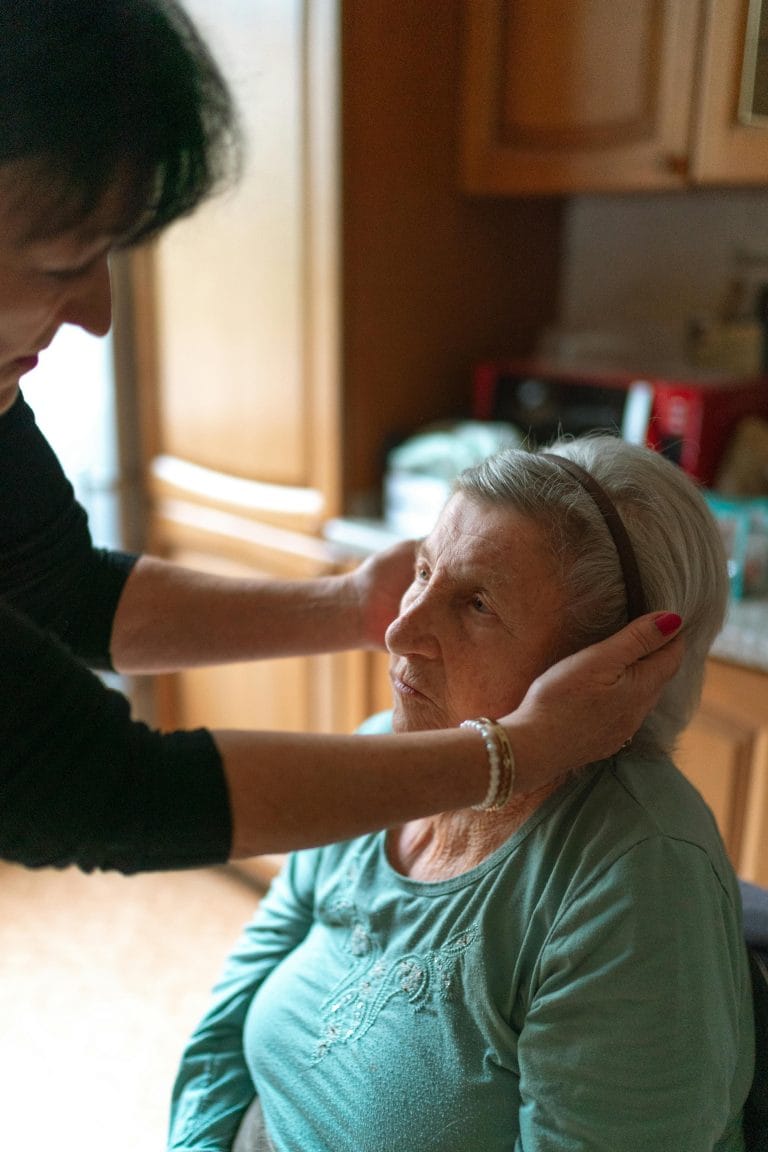
Deciding between home care and assisted living is one of the first big questions families in Southwest Florida face when a parent starts needing more help. One option keeps your parent in their own home with a caregiver who comes to them. The other moves them into a staffed community. Neither is automatically the right answer. Here is an honest, side by side look so you can choose with confidence.
There’s No Universal Right Answer
When a parent starts needing help, the two options most families consider are home care and assisted living. Both can work well. Both have real drawbacks. And the right choice depends entirely on your family’s situation, not on what a website tells you is “best.”
Here’s an honest look at both options so you can make a decision you feel good about.
What Home Care Looks Like Day to Day
With home care, a professional caregiver comes to your parent’s house on a schedule you set. That might be a few mornings a week for help with bathing and breakfast, or it might be full-time coverage with rotating caregivers.
Your parent stays in their own home, sleeps in their own bed, and keeps their routines. The caregiver adapts to them, not the other way around.
When Home Care Makes the Most Sense
Your parent wants to stay home. This sounds obvious, but it matters more than most families realize. Seniors who feel forced into a facility often decline faster, both emotionally and physically. If your parent is clear about wanting to stay put, that preference deserves real weight.
The needs are manageable. If your parent mostly needs help with daily tasks like meals, medications, bathing, light housework, and rides to appointments, home care handles all of that without uprooting their life.
The home is safe enough. A single-story home or a house with a bedroom and bathroom on the main floor is ideal. If the house itself creates safety risks that can’t be easily fixed, that changes the equation.
There’s some family involvement. Home care works best when family members stay engaged. Not doing the hands-on caregiving, but checking in, coordinating with the agency, and being present. It doesn’t have to be a huge time commitment, but it shouldn’t be completely hands-off.
What Assisted Living Looks Like Day to Day
Assisted living facilities provide a private or semi-private room in a staffed community. Meals, housekeeping, and basic personal care are included. Most facilities offer social activities, transportation, and on-site wellness programs.
Your parent gives up some independence in exchange for built-in structure and around-the-clock staff presence.
When Assisted Living Might Be the Better Fit
Safety is a serious concern. If your parent has had multiple falls, wanders due to dementia, or has been found in unsafe situations at home, the 24-hour staffing of a facility provides a safety net that part-time home care can’t match. If wandering has already started, our Florida Silver Alert guide is worth reading whichever way you go.
Loneliness is taking a toll. Some seniors living alone become deeply isolated, especially if they’ve stopped driving or lost a spouse. A good assisted living community offers daily social interaction that’s hard to replicate at home, even with a caregiver present.
The care needs are extensive. If your parent requires help with nearly every daily task and needs someone available overnight, around-the-clock home care can become more expensive than a facility, and harder to staff consistently.
The home is a burden. Sometimes the home itself becomes part of the problem: an aging house that needs constant maintenance, a property that’s hard to navigate, or a remote location far from medical care.
| Home Care | Assisted Living | |
|---|---|---|
| Where your parent lives | Their own home, own bed, own routines | A private or semi private room in a community |
| Typical Florida cost | $28 to $38 an hour, about $2,400 to $3,300 a month at 20 hours a week | $3,500 to $5,500 a month, more for memory care |
| Staffing | One caregiver at a time, on the schedule you set | Shared staff on site around the clock |
| Social life | Steady one on one company, plus family visits and outings | Built in activities and neighbors every day |
| Personal attention | The full attention of one caregiver | Attention shared across many residents |
| Best when | Your parent wants to stay home and the needs are manageable | Safety needs are high or the home has become a burden |
Comparing Costs in Florida
In Southwest Florida, home care costs typically run $28 to $38 per hour. For a family using 20 hours per week, that’s roughly $2,400 to $3,300 per month.
Assisted living in Florida averages $3,500 to $5,500 per month for a private room, with memory care units ranging from $5,000 to $7,000 or higher.
The crossover point is usually around 40 to 50 hours of home care per week. Below that, home care is typically less expensive. Above that, assisted living may offer better value, though “value” means different things to different families.
Worth noting: many families use both. They start with home care, and if needs increase beyond what’s practical at home, they transition to a facility. There’s no rule that says you have to pick one and stick with it forever.
Questions to Ask Yourself Before Deciding
Before you tour facilities or call agencies, sit down with your parent and any siblings involved, and work through these questions honestly:
- What does your parent actually want? Not what’s convenient for the family, but what they want. Have you asked them directly?
- What are the specific care needs right now? Write them down. How many hours per day does your parent need someone present?
- Is the current home safe, or can it be made safe? Grab bars, ramps, and stair lifts are relatively inexpensive compared to moving. Our aging in place checklist walks the house room by room.
- How involved can family be? If no one lives nearby and visits are rare, full-time home care with no family backup can be isolating for your parent and stressful for the caregiver.
- What’s the realistic budget? Factor in all income sources, including VA benefits, long-term care insurance, and savings. Be honest about what’s sustainable for years, not just months.
- What would your parent’s doctor recommend? Their physician knows the medical picture better than anyone and can offer perspective on what level of support is clinically appropriate.
Common Questions About Home Care vs. Assisted Living
Is home care cheaper than assisted living?
Up to about 40 to 50 hours a week, home care is usually the less expensive option. Past that point, the round the clock hours add up and a facility can offer better value. Our guide to home care costs in Florida breaks down the hourly math so you can compare it against local assisted living rates.
What is the difference between home care and assisted living?
Home care brings a trained caregiver to your parent’s own home for the hours you choose. Assisted living moves your parent into a staffed community where meals, housekeeping, and basic personal care are included. Home care keeps the surroundings familiar; assisted living trades some independence for around the clock staff nearby.
Is it better to keep an elderly parent at home?
For many families, yes, as long as the needs are manageable and the home is reasonably safe. Seniors who stay in familiar surroundings often hold onto their routines and their sense of self longer. When safety concerns grow serious, that balance can shift, which is exactly the judgment call this article is meant to help with.
Can you start with home care and move to assisted living later?
Absolutely, and plenty of families do. Home care is a natural first step that can scale up as needs change. If the day comes that a facility makes more sense, nothing about starting at home makes that transition harder.
Have to Figure This Out Alone
Choosing between home care and assisted living is one of the hardest decisions a family can make. It’s okay if you don’t have the answer yet.
If you’re leaning toward home care, or just want to understand what it would look like for your family, whether that is home care in Fort Myers or anywhere else in Southwest Florida, we’re happy to talk it through. No sales pitch, no pressure. Just a straightforward conversation about your options.
If the question underneath all of this is whether it is time at all, we wrote a separate, honest answer to when it is time for assisted living, including the signs it is not time yet.
Call (239) 400-4514 for a free consultation. We’ll help you think through what makes sense for your situation.
Not sure what kind of help your family needs yet? That's normal.
Tell us a little about what's going on at home. One of our care team calls you back the same business day, listens, and gives you an honest read on whether home care would help and how many hours make sense. No pressure, and nothing to sign.
- Florida-licensed home health agency since 2021
- Free in-home care assessment
- Lee, Collier, Charlotte, Sarasota, Manatee and Hillsborough counties
Request a call back